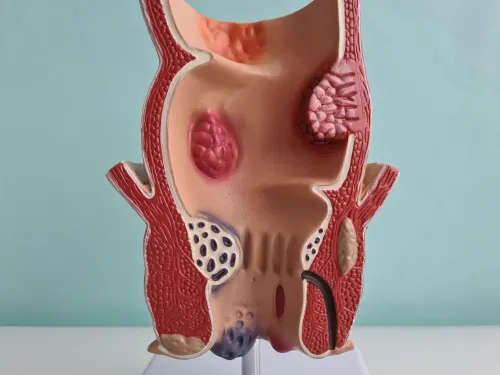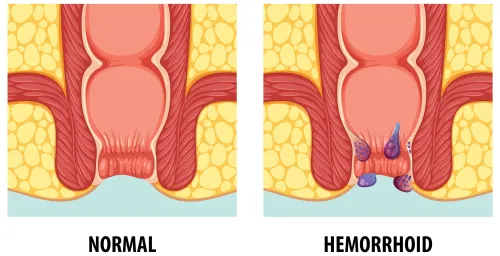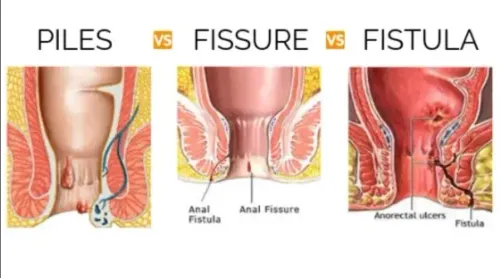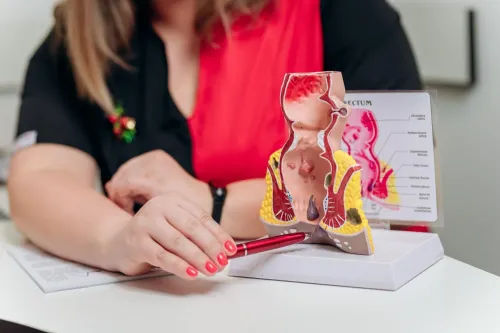
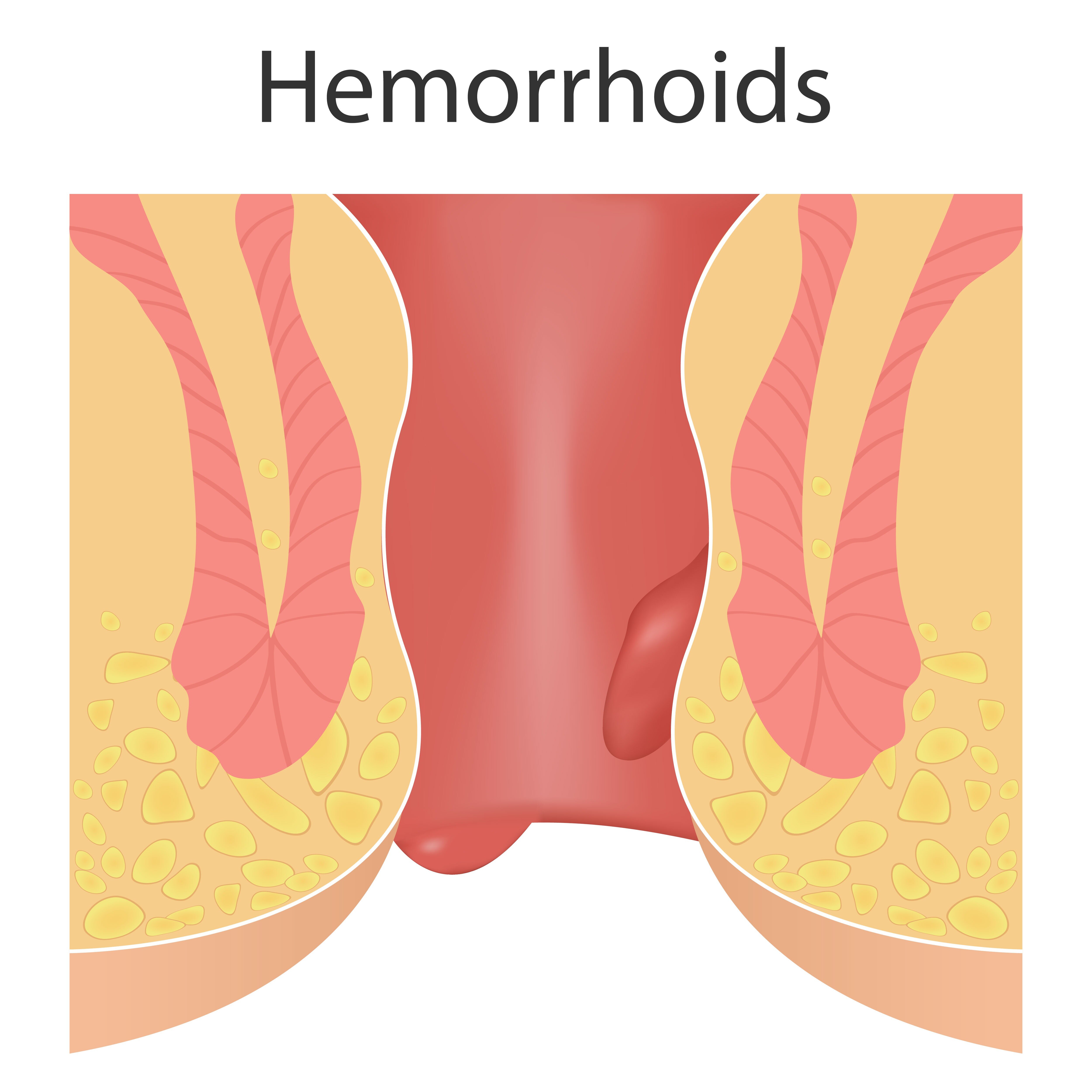
An abscess is a pocket of infected fluid; a fistula is a tunnel that can remain after the pocket has been drained. By the end, you will know when abscess treatment without admission is reasonable, which warning signs require hospital assessment, what day-care drainage involves, and how to question a clinic about fistula treatment.
Key takeaways
- An abscess needs pus drainage; a fistula needs tract and sphincter assessment.
- Fever, spreading redness, severe pain or diabetes can make hospital care safer.
- Ask how drainage, pain control, wound care and emergency review are handled.
- Choose a clinic that explains the fistula plan and schedules follow-up before discharge.
Is it an abscess, a fistula, or both?
A perianal abscess is an infected cavity containing pus; an anal fistula is an abnormal tract, usually connecting the anal canal to nearby skin. The distinction changes treatment: an abscess needs pressure and pus released, while a fistula needs assessment of its internal opening, path and relationship to the sphincter muscles.
| Condition | Clues | Treatment implication |
|---|---|---|
| Perianal abscess | Sudden pain, swelling, tenderness, warmth and fever | Drainage is usually the key treatment; antibiotics alone do not replace drainage of a drainable collection |
| Anal fistula | A recurring external opening, intermittent discharge, irritation, or a wound that closes and refills | Investigate the tract and plan fistula-specific treatment |
| Both | A painful lump followed by continuing or recurrent discharge | Treat the acute infection, then reassess for a persistent tract |
- Seek examination if pain, swelling or fever suggests an abscess. A small superficial collection differs from a deep or recurrent one, which can need imaging or examination under anaesthesia.
- After drainage, check whether pressure and pain improve, but also watch the wound. Persistent discharge, a new opening, or repeated closing and refilling requires specialist reassessment rather than indefinite home treatment.
- Tell the clinician about Crohn’s disease, hidradenitis suppurativa, tuberculosis, previous anorectal surgery or immune suppression. These conditions can change the diagnosis and treatment plan.
Draining an acute abscess can relieve pressure without closing an underlying fistula. If you are comparing perianal abscess fistula day care treatment in Bangalore, ask whether the plan addresses only the abscess or also evaluates a continuing tract.
When is day-care treatment safe, and when is hospital care safer?
A small, superficial, accessible abscess in a stable patient can often be opened and drained as day-care perianal abscess care. Same-day discharge is reasonable only after pain, bleeding, vital signs and recovery are satisfactory. Abscess treatment without admission is a possible pathway, not a promise for every patient.
| Situation | Safer pathway | Why |
|---|---|---|
| Small, superficial, accessible abscess; stable patient | Day-care drainage and observation | The cavity is reachable and recovery can be checked before discharge |
| Deep postanal, ischiorectal, intersphincteric or supralevator abscess | Hospital assessment, imaging and examination under anaesthesia | Deep infection can need more than one incision, staged drainage or inpatient monitoring |
| Large or recurrent abscess, spreading redness, severe pain, diabetes, immune suppression or suspected sepsis | Hospital-based care | The infection may extend beyond a safely managed superficial cavity |
Seek emergency assessment for:
- Fever or chills
- Rapid swelling
- Faintness or confusion
- A fast heartbeat
- Inability to pass urine
- Uncontrolled pain
- Rapidly spreading redness
These symptoms can signal deeper infection, spreading cellulitis or sepsis. Antibiotics alone do not replace drainage when pus has formed.
A clinician must examine the area before deciding on discharge. If the collection is deep, hidden or extensive, pelvic imaging, examination under anaesthesia or inpatient observation can change the plan from same-day care to hospital treatment.
What actually happens during perianal abscess day care?
A suitable day care perianal abscess care visit begins with a clinical examination to assess the lump’s size, depth and location. The clinician explains the proposed procedure, alternatives and risks, then obtains consent and discusses anaesthesia. Local or regional anaesthesia is suitable for some accessible abscesses; deeper infection may require general anaesthesia and hospital facilities.
- The area is numbed, an incision releases the pus, and the cavity is irrigated.
- The clinician may leave packing in the cavity or place a loose drainage seton when ongoing drainage is needed.
- You remain under observation for pain, bleeding, dizziness, urination and vital signs such as pulse, blood pressure and oxygen level.
- Before discharge, you receive instructions for wound care, bathing, dressing changes, prescribed analgesics and the follow-up date.
Endoanal ultrasound, pelvic MRI or CT is not routine for every obvious superficial abscess. Imaging becomes more useful when the collection is deep, recurrent, occult, complex or difficult to locate, or when examination cannot define the anatomy.
A deep postanal, ischiorectal, intersphincteric or supralevator infection can require more than one incision or examination under anaesthesia. The planned discharge route can change after examination, so a clinic advertising perianal abscess fistula day care treatment in Bangalore should explain what happens if same-day discharge is unsafe.
What does “non-operative fistula treatment” mean in practical terms?
Non operative fistula treatment is not equivalent to curing an ordinary cryptoglandular fistula. No generally established non-operative treatment reliably closes its internal opening and tract. Antibiotics, creams, sitz baths and pain medicines can reduce infection, irritation or pain, but they do not usually eliminate the tunnel.
Abscess drainage is different from fistula treatment. A loose seton keeps the tract draining and helps control sepsis; leaving it in place does not automatically cure the fistula. Once inflammation settles, the tract may need mapping and a definitive procedure.
| Option | What it does | When it applies |
|---|---|---|
| Fistulotomy | Lays the tract open to heal from its base | Simple, low fistula involving little sphincter muscle |
| Draining seton | Maintains drainage and controls infection | Inflamed, high or complex fistula before definitive treatment |
| LIFT | Closes the tract between the sphincter muscles | Selected fistulas crossing substantial sphincter |
| Endorectal advancement flap | Covers the internal opening with rectal tissue | Selected high or complex fistulas where sphincter division should be limited |
Fistulotomy is not automatically safe for a high tract because dividing too much sphincter can impair continence. Sphincter-preserving methods can have more variable healing and may require staged care or repeat procedures.
Ask the provider to state:
- The named technique and why it fits your anatomy
- How much sphincter muscle the tract involves
- Whether a draining seton comes first
- Whether staged treatment or repeat procedures may be needed
How should you choose a Bangalore clinic and plan follow-up?
Choose a fistula clinic in Bangalore by testing its fallback plan, not by accepting “same-day” as a diagnosis. Ask who will examine you, how deep or recurrent disease will be investigated, whether the provider can arrange pelvic MRI or examination under anaesthesia, which named technique is proposed, and what happens if admission becomes necessary.
| Proposal | Verify before consent | What it tells you |
|---|---|---|
| Abscess treatment without admission | Who drains it, how recovery is assessed, and when admission is triggered | A superficial, accessible abscess may qualify; deep or extensive infection may not |
| Fistula treatment | Whether the plan is fistulotomy, loose seton, LIFT, or endorectal advancement flap | The technique must match tract depth and sphincter involvement |
| Recurrent or unclear disease | Whether MRI, endoanal ultrasound, or examination under anaesthesia is available | Hidden branches or a deep cavity need better mapping |
Bharath Piles And Fistula Clinic is one Bangalore option you can question about its claimed day-care pathway; that claim does not prove every abscess qualifies for discharge. Ask for a written wound-care plan and a named clinician to contact.
Antibiotics do not replace drainage of pus. A clinician selects them after assessing systemic infection, surrounding cellulitis, significant immune suppression, diabetes, or another high-risk condition; do not use leftover tablets or seek a prescription without review.
Arrange prompt review for worsening pain, fever, bleeding, ongoing discharge, a wound that closes and refills, or a new opening.
Frequently asked questions
Is a perianal abscess the same as an anal fistula?
No. An abscess is a pus-filled infected cavity that needs drainage. A fistula is an abnormal tract linking the anal canal with nearby skin. Both can occur together, especially after an abscess drains or recurs.
When is day-care treatment for a perianal abscess safe?
Day-care treatment suits a patient who is stable, can receive assessment and drainage, has reliable transport and home support, and can return for review. Hospital care is safer for severe infection, spreading redness, uncontrolled pain, major medical conditions, or symptoms requiring monitoring.
What happens during perianal abscess day care?
The clinician examines the area, confirms the diagnosis, explains anaesthesia and drainage, releases the pus, controls pain, gives wound-care instructions, and arranges follow-up. Ask who to contact if fever, swelling or pain worsens after discharge.
What does non-operative fistula treatment mean?
It means a treatment plan that does not immediately use conventional open fistula surgery. The clinician still needs to identify the internal opening, map the tract and assess its relationship to the sphincter before recommending an appropriate option.
How should you choose a fistula clinic in Bangalore?
Ask whether the clinic evaluates abscesses and fistulas separately, explains the proposed treatment, provides written aftercare instructions, identifies warning signs, and schedules follow-up. Confirm where you would be transferred if hospital care became necessary.
Keywords