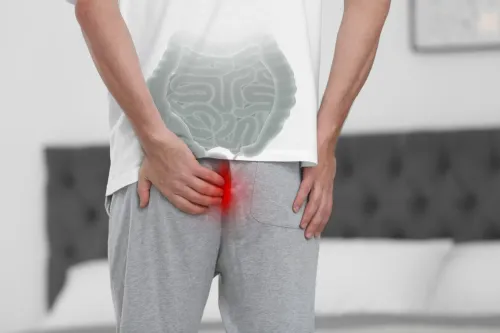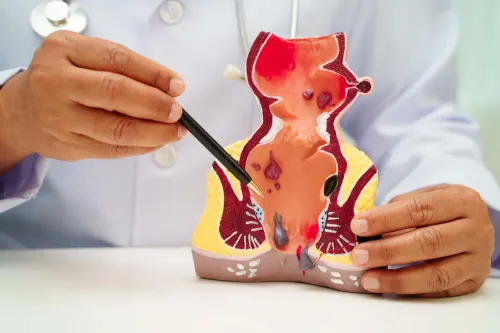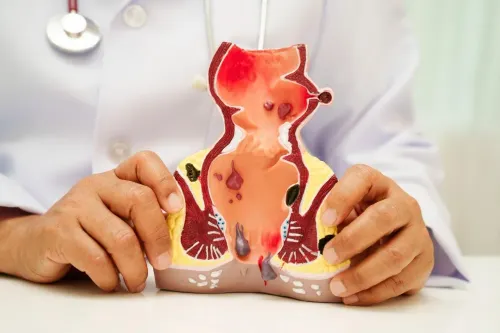
A painful lump near the anus can be an acute pus-filled abscess, a fistula that keeps reopening, or another condition with different treatment needs. You will learn how to distinguish the warning signs, when to seek urgent care, which examinations and procedures matter, and how to choose a suitably trained specialist in Bangalore.
Key takeaways
- Sudden severe pain, swelling, fever, or pus needs prompt medical assessment.
- A recurring opening that drains near the anus points more strongly to fistula.
- Abscess drainage treats trapped pus; fistula treatment addresses the abnormal tunnel.
- Choose a colorectal or specialist anorectal clinic with examination and imaging access.
Abscess or fistula: which symptoms point to each condition?
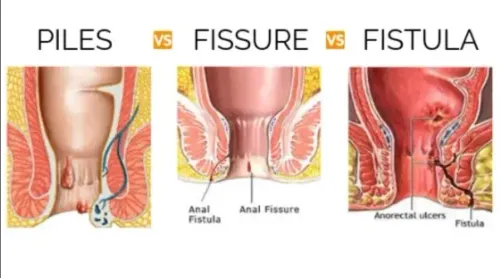
A perianal abscess is an acute infection: a pocket of pus forms beside the anus. An anal fistula is a small abnormal tunnel between the anal canal and nearby skin, often left after an abscess drains.
A painful lump alone does not prove a fistula; a new abscess can cause the same lump without a persistent tract.
| Feature | Acute perianal abscess | Anal fistula |
|---|---|---|
| Constant throbbing pain | Common, often worsening | Less typical between flare-ups |
| Skin changes | Tender, swollen, red or warm area | Small opening, irritation or a non-healing wound |
| Drainage | Pus may appear as pressure increases or after drainage | Intermittent discharge from the same opening |
| Systemic symptoms | Fever or chills can occur | Less likely unless a new abscess forms |
| Pattern | Usually a new, painful episode | Repeated swelling that bursts and settles |
A fistula often follows an abscess that has opened or been drained, but the diagnoses are not interchangeable. A recurring opening, repeated discharge, irritation or swelling that repeatedly bursts supports fistula assessment, especially after a previous abscess. Multiple or slow-healing episodes need evaluation for Crohn’s disease or another underlying cause.
Perianal disease occurs close to the anus and involves different anatomy from a pilonidal sinus, which usually sits in the natal cleft between the buttocks.
If searching for a perianal abscess or fistula specialist near Bangalore, ask whether the clinician assesses both conditions; a perianal abscess specialist in Bangalore should not assume every cleft lump is anal disease.
When does a perianal lump need urgent medical assessment?
Seek same-day medical assessment, not a routine appointment, if a perianal lump comes with any of these warning signs:
- Fever or chills
- Pain or swelling that is rapidly worsening
- Redness spreading beyond the lump
- Inability to pass urine
- Severe weakness, faintness or feeling acutely ill
Diabetes, immune suppression, or a recent major illness lowers the threshold for same-day evaluation, even without a high fever. These conditions can impair infection control and allow an abscess to spread faster. Go to an emergency department if you feel severely unwell or cannot urinate.
Do not squeeze, puncture or attempt to drain the lump yourself. You can push infection deeper, cause bleeding or injure nearby tissue. A walled-off abscess needs examination for drainage; leftover antibiotics, creams and home remedies do not reliably remove the pus collection.
Delaying care can turn a manageable infection into a deeper or more complicated one.
If you are searching for a perianal abscess specialist in bangalore or an abscess diagnosis clinic in bangalore, ask whether same-day assessment and drainage are available. Antibiotics alone do not reliably clear an abscess, although a clinician may prescribe them when spreading skin infection, systemic illness, immune suppression or important medical conditions are present.
How will a specialist confirm abscess, fistula or another cause?
A specialist usually confirms a straightforward perianal abscess clinically; imaging is not necessary for every obvious, superficial collection. The assessment also checks whether the problem is a fistula or another cause.
1. The specialist takes a symptom history. Describe when pain began, whether it is constant or worsening, any fever, previous abscesses, spontaneous bursting, pus or blood, and how long a wound has remained open. Mention bowel symptoms, weight loss, diarrhoea, and any history of Crohn’s disease.
2. The clinician inspects the skin around the anus. They look for redness, swelling, a tender lump, an external opening, recurrent drainage, a non-healing wound, or scars from earlier episodes. Gentle pressure can reveal fluctuance, the soft movement that suggests fluid beneath the skin.
3. A gentle digital rectal examination checks for deeper tenderness, a mass, or an internal opening when you can tolerate it. Severe pain can make an office examination unreliable or impossible, so do not force the examination.
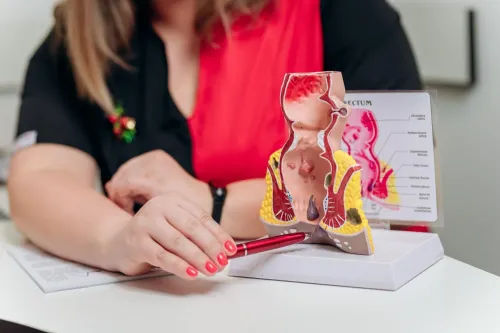
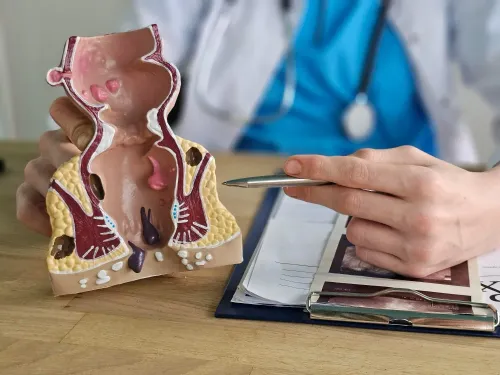
4. Ask whether you need MRI pelvis, endoanal ultrasound, or examination under anaesthesia. These tests help find deep, recurrent, horseshoe, complex, or Crohn’s-associated disease and map a hidden tract.
5. Ask an abscess diagnosis clinic in Bangalore whether it can arrange MRI pelvis and examination under anaesthesia, and how it assesses Crohn’s disease or another underlying cause when disease is recurrent, multiple, or unusually slow to heal. A specialist may coordinate gastrointestinal assessment instead of repeatedly treating each episode alone.
Why abscess drainage and fistula treatment are different decisions
Incision and drainage treats the immediate problem: a surgeon opens a pus-filled abscess, empties it and leaves the wound able to drain. It does not automatically eliminate an anal fistula, which requires mapping the tract and its relationship to the anal sphincter before treatment.
| Option | What it does | When it applies |
|---|---|---|
| Fistulotomy | Opens the tract along its length | A simple, low fistula involving little sphincter muscle |
| Seton placement | Keeps the tract draining or gradually treats it | Selected high or complex fistulas |
| LIFT | Closes the tract through the intersphincteric plane | Suitable anatomies where sphincter preservation matters |
| Advancement flap or another sphincter-sparing approach | Covers or closes the internal opening without cutting substantial sphincter | Selected high, complex or recurrent fistulas |
Fistulotomy can offer a strong chance of curing a suitable low tract, but cutting more sphincter increases the risk of impaired control of gas or stool. Sphincter-preserving treatment reduces that risk, yet it can require staged care and carries a risk of persistence or recurrence.
After either procedure, follow wound-care instructions, keep the area clean, manage dressings or drainage as directed, and attend follow-up so healing and continence can be checked. Confirm the diagnosis before choosing a day-care or non-operative pathway; a label alone is not enough.
Ask any perianal abscess or fistula specialist near Bangalore how the tract was assessed, what happens if it persists, and when hospital-based examination or imaging is needed.
How to choose the right specialist near Bangalore
Choose a colorectal surgeon or an appropriately trained general surgeon who assesses anorectal disease, arranges urgent abscess drainage, and can provide or refer you for MRI pelvis and examination under anaesthesia when indicated.
| Provider option | What to verify | Why it matters |
|---|---|---|
| Colorectal surgeon | Training, fistula experience and hospital access | Complex tracts may need specialist mapping and staged treatment |
| Appropriately trained general surgeon | Anorectal caseload, urgent drainage and referral pathways | A painful abscess can require treatment before routine imaging |
| “Proctologist” clinic | The examining clinician’s qualifications and surgical privileges | The label alone does not establish training or available treatment |
| Pilonidal-sinus clinic | Experience with anal fistulas, including recurrent and complex cases | A natal-cleft sinus is different from disease beside the anus |
Do not judge a clinic by treatment claims alone. Ask how the doctor will protect the anal sphincter, discuss the risk of impaired gas or stool control, plan for recurrence, and manage a fistula that needs staged or hospital-based care.
If you search for “fistula doctor near me” or “perianal abscess or fistula specialist near bangalore,” ask whether the service treats complex and recurrent fistulas, not only pilonidal sinus or superficial lumps. Recurrent, multiple or slow-healing disease also warrants discussion of Crohn’s disease and referral for gastrointestinal assessment.
Bharath Piles And Fistula Clinic can be compared with other Bangalore providers, but verify which clinician will examine you, whether urgent drainage is available, and what happens if you need MRI pelvis, examination under anaesthesia or hospital care.
Frequently asked questions
How can you tell a perianal abscess from a fistula?
An abscess usually causes a painful, tender swelling that develops quickly, often with fever or worsening pain. A fistula more often causes a recurring skin opening, intermittent pus or blood drainage, irritation, or repeated abscesses.
When does a perianal lump need urgent medical assessment?
Seek prompt assessment for severe or increasing pain, fever, chills, rapidly enlarging swelling, spreading redness, difficulty passing urine or stool, or feeling faint. Diabetes, immune suppression, or pregnancy also lower the threshold for urgent care.
How does a specialist confirm an abscess or fistula?
The specialist reviews your symptoms and examines the skin around the anus and anal canal. If the tract is unclear or deep, they may recommend pelvic MRI, endoanal ultrasound, or examination under anaesthesia.
Why are abscess drainage and fistula treatment different?
An abscess contains trapped pus and usually requires drainage to control the infection. A fistula is a persistent tunnel, so treatment must map and close or divide the tract while protecting the anal sphincter.
Which specialist should you choose near Bangalore?
Look for a colorectal surgeon or specialist anorectal clinic that evaluates both abscesses and fistulas, explains examination and imaging options, and provides a clear urgent-care plan.
Keywords